


With the strongest field in golf and the iconic challenge of TPC Sawgrass, the tournament already feels like the sport’s unofficial fifth major.
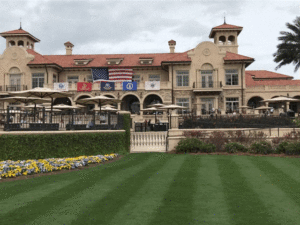
Professional golf has four universally recognized major championships: The Masters Tournament, U.S. Open, Open Championship, and PGA Championship. These form the sport’s most prestigious tier, defining careers and legacies. One event—The Players Championship—is often mentioned with them for its difficulty, field strength, and prize money. Despite its status as “the fifth major,” it remains outside the official major category. Understanding why requires examining each event’s history, structure, prestige, and The Players Championship’s unique role.
The Masters Tournament, held annually at Augusta National Golf Club since 1934, is golf’s most iconic event. Renowned for traditions like the Green Jacket and opening tee shots, the Masters stands apart for being played at the same course each year. Its invitational format brings a smaller, elite field than other majors.
The U.S. Open, hosted by the United States Golf Association, is known for its demanding course setups. It rotates venues, with narrow fairways, thick rough, and fast greens, testing every aspect of play. Its qualifying system allows amateurs and lesser-known pros to compete, reinforcing its status as the most democratic of the majors.
The Open Championship—often called the British Open—is the world’s oldest golf tournament, first held in 1860. Run by The R&A, it is played on historic links courses across the United Kingdom. Wind, weather, and firm coastal terrain create unique conditions. Courses like St Andrews Links reflect the event’s deep history, making it a celebration of golf’s origins.
The PGA Championship, managed by the PGA of America, completes the major lineup. Previously held in August, it is now in May and offers tough courses favoring powerful modern play. Its tradition of including club professionals allows teaching professionals to compete with the best.
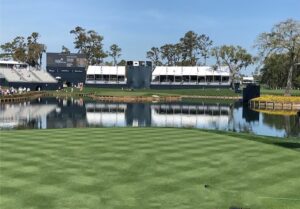
In comparison, the Players Championship differs structurally from the four majors. Established in 1974 and organized by the PGA Tour, the event serves as the tour’s flagship tournament. Since 1982, it has been played at TPC Sawgrass, famous for its dramatic par-3 17th hole with an island green. The course is designed to challenge every type of player, minimizing the advantage of players based purely on distance or power.
One major reason the Players Championship is not considered a major is governance. The four majors are run by separate governing bodies representing the broader game of golf—the USGA, The R&A, Augusta National, and the PGA of America—rather than a single professional tour. Because the Players Championship is operated by the PGA Tour itself, critics argue that labeling it a major would create a conflict of interest and give the tour too much influence over golf’s most prestigious category.
Another factor is historical tradition. The majors developed their prestige over many decades, some more than a century. The Open Championship dates back to the 19th century, while the Masters, though younger, quickly became embedded in golf culture through its traditions and champions. By contrast, the Players Championship is relatively modern, with only about half a century of history. Prestige in golf often grows slowly through generations of memorable moments, legendary winners, and cultural significance.
However, there are compelling arguments for recognizing The Players Championship as a major. Its field strength is consistently the deepest in professional golf, often surpassing that of the other four majors. Unlike some majors that reserve spots for amateurs, past champions, or international qualifiers, The Players Championship assembles nearly every current top-ranked PGA Tour golfer, ensuring the highest-caliber competition. This exceptional concentration of elite talent means that winning the tournament usually requires conquering one of the most formidable fields in the sport, underlining its significance as a true test for the game’s best.
Additionally, The Players Championship boasts one of the largest purses in golf, frequently eclipsing those of some major championships. The venue—TPC Sawgrass—not only serves as an equalizer but is specifically designed to eliminate advantages based solely on distance or power, demanding mastery in all aspects of the game. The tournament regularly produces moments of drama and pressure that rival, or even surpass, those at the established majors. The iconic 17th hole is a prime example, with its island green delivering nerve-wracking tests that define champions, further solidifying the event as one of golf’s ultimate challenges.
Finally, The Players Championship’s reputation has grown substantially among both players and analysts. Many professionals call it the “fifth major,” not only because of its competitive intensity but also because of the respect it commands on the PGA Tour. Winning The Players Championship is often seen as a career milestone, on par with a major, and it illustrates the tournament’s capacity to elevate a player’s profile and shape golfing legacies.
The Players Championship stands apart for its exceptional field, top-tier rewards, and defining moments, putting it on par with the established majors in terms of significance. Its lack of a century-old tradition or independent governance continues to hold it back from official major status. Still, as professional golf evolves and the prestige of The Players Championship grows, the tournament’s credentials offer a compelling case for rethinking what defines a major championship. ed.